
|
Getting your Trinity Audio player ready...
|
Introduction: Why This ₹10,000 Marketing Experiment Matters
Most businesses think digital marketing success depends on big budgets, expensive campaigns, or high-end tools. But in reality, budget is not the deciding factor strategy is.
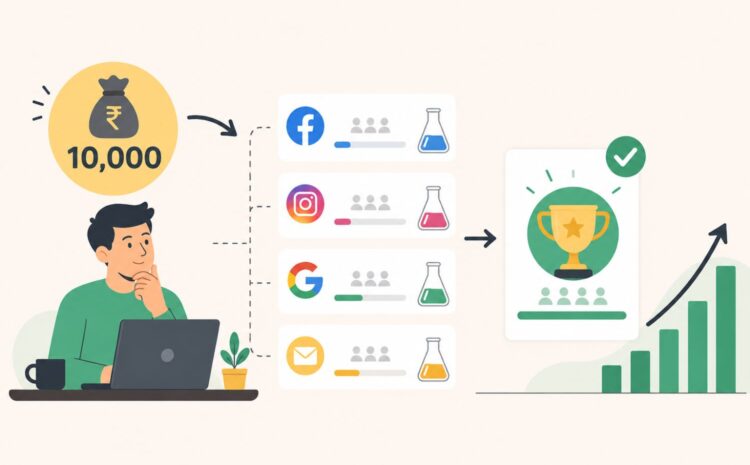
This ₹10,000 marketing experiment was designed to test a simple question: what actually works in digital marketing when the budget is limited and every rupee matters?
The goal was not vanity metrics like impressions or likes. The goal was simple—real leads, real engagement, and actual conversions.
What came out of this experiment is something every business should understand before spending money on ads.
The Core Idea Behind the Experiment
With a limited budget of ₹10,000, you cannot afford to take chances. Every decision becomes measurable. Every mistake becomes visible.
This is where most businesses actually learn what drives performance in digital marketing.
Instead of spreading money randomly across platforms, the budget was tested across three core areas:
- Targeted paid ads
- Content-driven engagement
- Retargeting campaigns
The focus was not reach, but efficiency.
And this is where the real insights began.
What Failed in the ₹10,000 Marketing Experiment
The first clear failure was broad targeting.
When ads were shown to a large, undefined audience, the engagement looked good on the surface, but conversions were extremely low. People clicked, but they did not act.
This is one of the most common mistakes in digital marketing—confusing traffic with results.
Another failure was weak landing page clarity. Even when the right users clicked, they did not convert because the message was not direct enough.
This highlights an important truth in digital marketing: if your landing page cannot explain your value clearly in seconds, your ad budget gets wasted.
What Actually Worked in This Marketing Experiment
The strongest performance came from one major shift—narrow audience targeting with clear intent-based messaging.
Instead of reaching everyone, the ads were focused on people who already showed interest in similar services. This immediately improved engagement quality.
The second strong performer was retargeting.
Users who visited once but did not convert were shown follow-up ads. This created familiarity, and familiarity slowly built trust.
Most conversions did not happen on the first interaction. They happened after the second or third exposure.
This is a key insight many businesses miss when analyzing their campaigns.
Even experienced teams often emphasize retargeting because it significantly improves ROI without increasing ad spend.
Why Hire Fifth Shield
At Fifth Shield, we focus on real business growth not just clicks and impressions. Our strategy-driven approach helps businesses generate quality leads, improve conversions, and maximize ROI.
From targeted ads and retargeting to SEO and landing page optimization, we ensure every rupee works smarter. Whether your budget is small or large, we build marketing systems designed for long-term profitability.
As a trusted digital marketing agency in Delhi NCR, we help businesses turn marketing spend into measurable revenue growth.
The Real Lesson: Strategy Beats Budget
The biggest takeaway from this experiment is simple.
₹10,000 is not too small for marketing. The problem is how it is used.
If targeting is unclear, messaging is weak, and tracking is missing, even ₹1 lakh will not perform well.
But if strategy is clear, even a small budget can generate meaningful results.
Digital marketing success depends more on precision than spending power.
Why Most Businesses Fail With Small Ad Budgets
Most businesses fail not because their product is weak, but because their approach is unstructured.
They run ads without testing. They target broad audiences. They expect instant sales without building trust.
But digital marketing does not work instantly. It works through exposure, familiarity, and trust-building.
Without understanding this process, budgets get wasted quickly.
What You Should Learn From This Experiment
If you are running ads or planning to start, this experiment gives you a clear direction:
Start small. Test everything. Focus on conversion, not clicks. Improve targeting before scaling. And always track what actually brings results.
This approach reduces waste and improves long-term profitability.
SEO Insight: Why This Topic Matters for Ranking
Topics like “₹10,000 marketing experiment” perform well because they match real user curiosity.
People are not just looking for theory—they want practical breakdowns, real results, and relatable case studies.
That is why content with clear structure, real insights, and keyword relevance tends to perform better in search results.
FAQs
Q1. Can a ₹10,000 budget work in digital marketing?
Ans: Yes, if used with proper targeting, testing, and clear strategy. Budget alone does not decide success.
Q2. What is the biggest mistake in small budget marketing?
Ans: Broad targeting without knowing the intent and behavior of the audience is the worst error.
Q3. What worked best in this ₹10,000 experiment?
Ans: Retargeting and narrow audience targeting delivered the best results.
Q4. Should businesses focus on ads or strategy first?
Ans: Strategy should always come first. Ads only amplify what is already structured.
Q5. Can a digital marketing agency help improve ROI?
Ans: Yes, a professional setup like an experienced digital marketing agency in Delhi NCR can help improve targeting, conversion rate, and overall campaign efficiency.
Final Thoughts
This ₹10,000 marketing experiment proves one thing very clearly.
Marketing is not about how much you spend. It all comes down to how wisely you spend it..
Small budgets expose mistakes faster, but they also reveal what actually works.
And once you understand that, scaling becomes predictable, efficient, and profitable.
Also Read:- The ROI Formula Most Businesses Ignore in Digital Marketing