
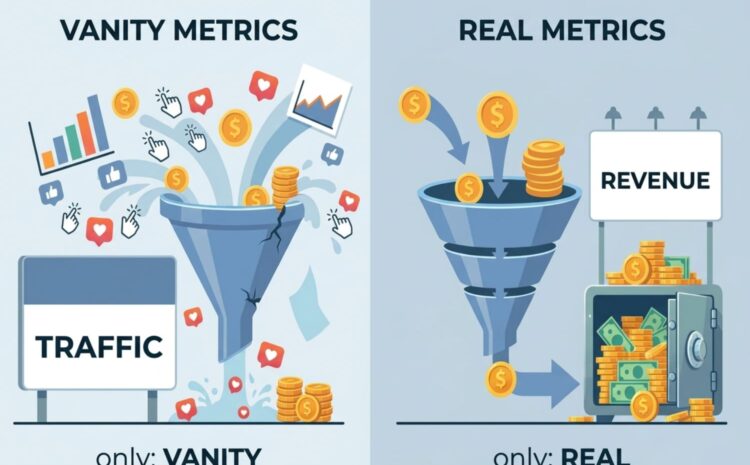
The False Positives of Digital Marketing (Metrics That Mislead You)
|
Getting your Trinity Audio player ready...
|
- Your marketing dashboard says everything is working.
Traffic is increasing. Ads are getting clicks. Social media engagement is growing.
But your sales? Still flat.
This is the hidden trap most businesses fall into. They measure success using numbers that look impressive but don’t actually generate revenue.
Last month, a Delhi-based service business celebrated crossing 25,000 website visitors. Their team believed their SEO strategy was finally working. But when they checked their CRM, they had only 3 actual leads.
This is the reality of false positives in digital marketing—metrics that create the illusion of growth without delivering real results.
According to HubSpot, over 60% of marketers struggle to prove ROI despite having positive campaign metrics. This disconnect between performance and revenue is where most businesses lose time, money, and opportunities.
Businesses today, especially those working with agencies like Fifth Shield, are shifting focus from vanity metrics to performance-driven data that actually drives growth.
This blog breaks down the most misleading metrics, why they fail, and what you should focus on instead.
What Are False Positives in Digital Marketing?
False positives in digital marketing are metrics that indicate success without contributing to real business outcomes like leads, sales, or revenue.
For example, a campaign may generate thousands of impressions and clicks, but if those users don’t convert, the campaign has little real impact.
These metrics create a false sense of progress and often lead businesses to continue investing in strategies that are not actually working.
In simple terms, false positives make your marketing look successful on reports while your business struggles in reality.
Why Vanity Metrics Can Mislead Your Strategy
Vanity metrics are numbers that look good but don’t help in decision-making.
A common scenario is when a brand celebrates social media growth.
An e-commerce brand increased its Instagram following from 5,000 to 50,000 in just three months using viral reels and trending content. Engagement was high, posts were getting thousands of likes, and reach was growing rapidly.
But when they analysed sales data, there was no significant increase in revenue.
The reason was simple—the audience was not relevant. The content attracted attention but not buyers.
This is where vanity metrics become dangerous. They distract businesses from focusing on meaningful outcomes.
That’s why structured strategies, like those implemented by Fifth Shield, focus on metrics that directly connect with business goals instead of surface-level growth.
Common Digital Marketing Metrics That Mislead You
Understanding misleading metrics helps you avoid wrong decisions.
- Website Traffic without Intent
High traffic does not guarantee results. If visitors are not your target audience, they won’t convert into leads or customers.
- Social Media Likes and Followers
A large audience means nothing if it does not engage with your business or convert into sales.
- Impressions without Engagement
Seeing your content does not mean users are interested. Without interaction, impressions have little value.
- Click-Through Rate without Conversion
Clicks show curiosity, not commitment. If users don’t take action after clicking, the campaign is ineffective.
- Low Cost Per Click without ROI
Cheap traffic is not always valuable. If those clicks don’t convert, the cost becomes irrelevant.
- Bounce Rate without Context
Bounce rate alone cannot define performance. User intent and page purpose matter more.
These are the most common digital marketing metrics that mislead you, especially when they are not connected to real outcomes.
The Moment Most Businesses Realize the Truth
There comes a point when numbers stop making sense.
A B2B company running paid ads saw strong campaign performance. Their reports showed:
- High impressions
- Good click-through rate
- Increasing website traffic
- Everything looked perfect.
But their sales team reported something completely different low-quality leads and almost no conversions.
That’s when they realized the problem.
- Their campaigns were optimized for clicks, not for qualified leads.
- This is the moment most businesses understand that not all growth is real growth.
- It’s not about how many people see your content—it’s about how many people actually take action.
Table of Contents
How to Identify Real Performance Metrics
To move beyond false positives, businesses need to focus on metrics that directly impact growth.
Key metrics include:
- Conversion Rate (how many visitors take action)
- Cost Per Lead (actual lead generation cost)
- Customer Acquisition Cost (CAC)
- Return on Investment (ROI)
- Lead Quality and Sales Conversion Rate
For example, instead of tracking total traffic, measure how many visitors turn into leads.
Instead of focusing on likes, track how many users actually contact your business.
This shift towards meaningful metrics is a core part of performance-focused strategies used by teams like Fifth Shield.
How to Fix Your Marketing Measurement Strategy
To fix your strategy, you need to align your data with your business goals.
Start by defining what success actually means leads, sales, or revenue.
Then track only those metrics that directly contribute to that goal.
Use tools like Google Analytics, CRM systems, and conversion tracking to understand user behaviour beyond surface-level numbers.
Analyse your marketing funnel regularly. Identify where users drop off and optimise those stages.
Avoid making decisions based on a single metric. Always look at the complete journey from click to conversion.
Businesses that implement this structured approach eliminate false positives and build sustainable growth.
FAQ
What are vanity metrics in digital marketing?
Vanity metrics are numbers like likes, impressions, and traffic that look impressive but do not directly impact business growth.
Why does high traffic not lead to sales?
Because not all traffic is relevant. If visitors are not your target audience, they won’t convert into customers.
Which metrics actually matter for ROI?
Conversion rate, cost per lead, customer acquisition cost, and ROI are the most important performance metrics.
How can I identify misleading metrics?
If a metric does not connect to leads, sales, or revenue, it is likely a false positive.
Hire Fifth Shield
If your marketing reports look good but your revenue doesn’t, you’re likely tracking the wrong metrics.
That’s exactly what teams like Fifth Shield help fix.
As the best digital marketing agency in Dwarka, Fifth Shield focuses on performance-driven digital marketing strategies that go beyond vanity metrics and deliver real business results.
Instead of chasing impressions and clicks, the focus is on building systems that generate leads, conversions, and long-term growth.
Wrapping Up
Digital marketing success is not about numbers—it’s about meaningful outcomes.
False positives can make your strategy look successful while hiding real problems. The key is to focus on metrics that truly reflect growth.
When you shift from vanity metrics to performance-driven data, your marketing becomes more predictable, measurable, and effective.
Because in the end, it’s not about how good your reports look—it’s about how well your business grows.
Don’t miss :- The Role of AI in Digital Marketing: Things You Need to Know